
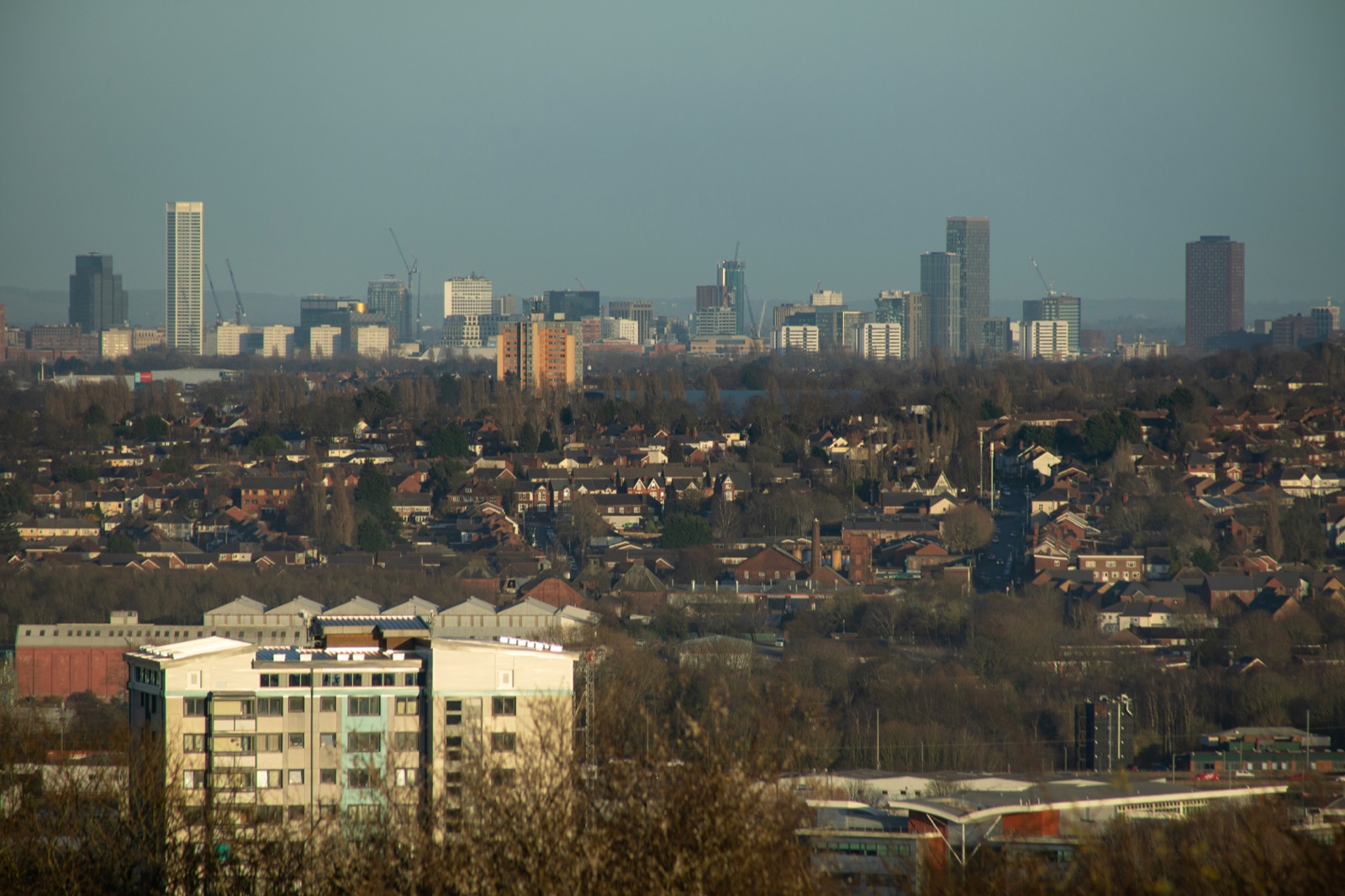
Harborne
Named the best place to live in Birmingham by The Sunday Times in 2025, Harborne combines a genuine village high street with easy access to the city centre. Independent restaurants, boutiques, and Queen's Park make it equally popular with young professionals and families. The average sold price is £326,991.
Transport is the one catch: there is no railway station in Harborne, and residents rely on bus routes into the city. The area compensates with excellent nearby schools, including King Edward VI Five Ways, and some of Birmingham's most coveted residential streets.
Moseley
Moseley has long been Birmingham's bohemian heartland, with Victorian terraces, independent cafes, a monthly farmers' market, and Cannon Hill Park on its doorstep. In April 2026, Moseley Village station opens on the new Camp Hill line, cutting the journey to Birmingham New Street to just eight minutes.
The average sold price stands at £336,330, though semis regularly exceed £450,000 on the most desirable streets. The new station is the biggest transport improvement the area has seen in decades and is expected to further strengthen demand.
Edgbaston
Edgbaston is Birmingham's most established and prestigious residential area. It boasts wide, tree-lined streets, large Georgian and Victorian homes, and a conservation-area character, all within less than two miles of the city centre. The typical sale price is £369,633.
The area is also evolving. New Garden Square — a mixed-use development by Moda Living on an 11-acre Hagley Road site — is delivering up to 1,600 new homes across several phases. A new Hagley Road Metro stop serves the scheme, improving east-west connections for residents.
Sutton Coldfield
The Royal Town of Sutton Coldfield is Birmingham's family benchmark. It combines outstanding schools, including Bishop Vesey's Grammar School and the Ofsted-outstanding Arthur Terry School, with one of the lowest crime rates in the West Midlands. Average sale prices sit at roughly £405,872.
The Cross-City line delivers direct trains to Birmingham New Street in approximately 20 minutes from Sutton Coldfield, Four Oaks, and Butlers Lane stations. Sutton Park, at over 2,400 acres, is one of Europe's largest urban parks, and Mere Green village provides an independent high street.
The Jewellery Quarter
The Jewellery Quarter offers a style of city living found nowhere else in Birmingham. Cobbled streets, Georgian architecture including St Paul's Square, converted warehouse apartments, and a thriving creative-industries scene are packed into just over a square kilometre immediately northwest of the city centre. Homes sell for an average of £236,017.
Jewellery Quarter station connects to both the Cross-City rail line and the West Midlands Metro Line 1 tram, making it one of the best-connected neighbourhoods in the city. The predominantly flat stock keeps entry prices accessible, with gross rental yields of 5.5–6.5% attracting buy-to-let investors alongside owner-occupiers.
Kings Heath
Kings Heath combines Moseley's community spirit with a more accessible price point, centred on a high street of independent cafes and boutiques. The Kitchen Garden Cafe and monthly farmers' market at All Saints Square have established it as a destination neighbourhood in its own right. Recent sales figures put the local average at £282,585.
April 2026 marks a significant moment for the area: the new Kings Heath station opens on the Camp Hill line, ending over 80 years without a direct rail link to Birmingham New Street. The half-hourly service is expected to push demand higher in an already growing market.
Bournville
Bournville is unlike any other Birmingham neighbourhood. It was built by the Cadbury family from 1895 as a model village for their workers. It is now managed by the Bournville Village Trust, an independent charity that preserves its distinctive Arts and Crafts architecture and village green. The average sold price is £330,435, up 4% year-on-year.
Properties are subject to conservation area rules and Bournville Village Trust covenants, which protect the village character but restrict alterations. That is an important point worth understanding before buying. Bournville station provides direct Cross-City line services to Birmingham New Street in approximately 15 minutes, and local schools are consistently strong.
Digbeth
Once a derelict industrial zone, Digbeth is now the city's most ambitious regeneration story. The Custard Factory's galleries and independent food scene have transformed its character, while the £1.9 billion Smithfield masterplan — on 17 hectares south of the Bullring — promises more than 3,000 homes and 9,000 jobs.
The Metro Eastside extension is progressing through Digbeth, with track-laying complete as of late 2025. The planned HS2 Curzon Street station — due no earlier than 2033 — will make this one of the most connected locations in the country. With an average sold price of £215,132, Digbeth is the most affordable area in this guide.
Stirchley
Stirchley was named Best Place to Live in the Midlands by The Sunday Times in 2024. That was driven by a grassroots explosion of independent businesses along Pershore Road, including the celebrated Stirchley Beer Mile, home to more than 13 breweries, taprooms, and bars. With average prices of £250,000, it remains significantly more affordable than neighbouring Moseley.
The new Pineapple Road station opens on the Camp Hill line in April 2026, giving Stirchley its first direct rail link to Birmingham New Street in over 80 years. For buyers seeking community character and value without a Moseley price tag, it is one of the city's most compelling propositions.
Which Area Is Right for You?
Birmingham's neighbourhoods each serve a distinct way of life. Families tend towards Sutton Coldfield or Bournville for schools and safety; young professionals head to Digbeth or the Jewellery Quarter; community-minded buyers favour Harborne, Moseley, or Kings Heath.